
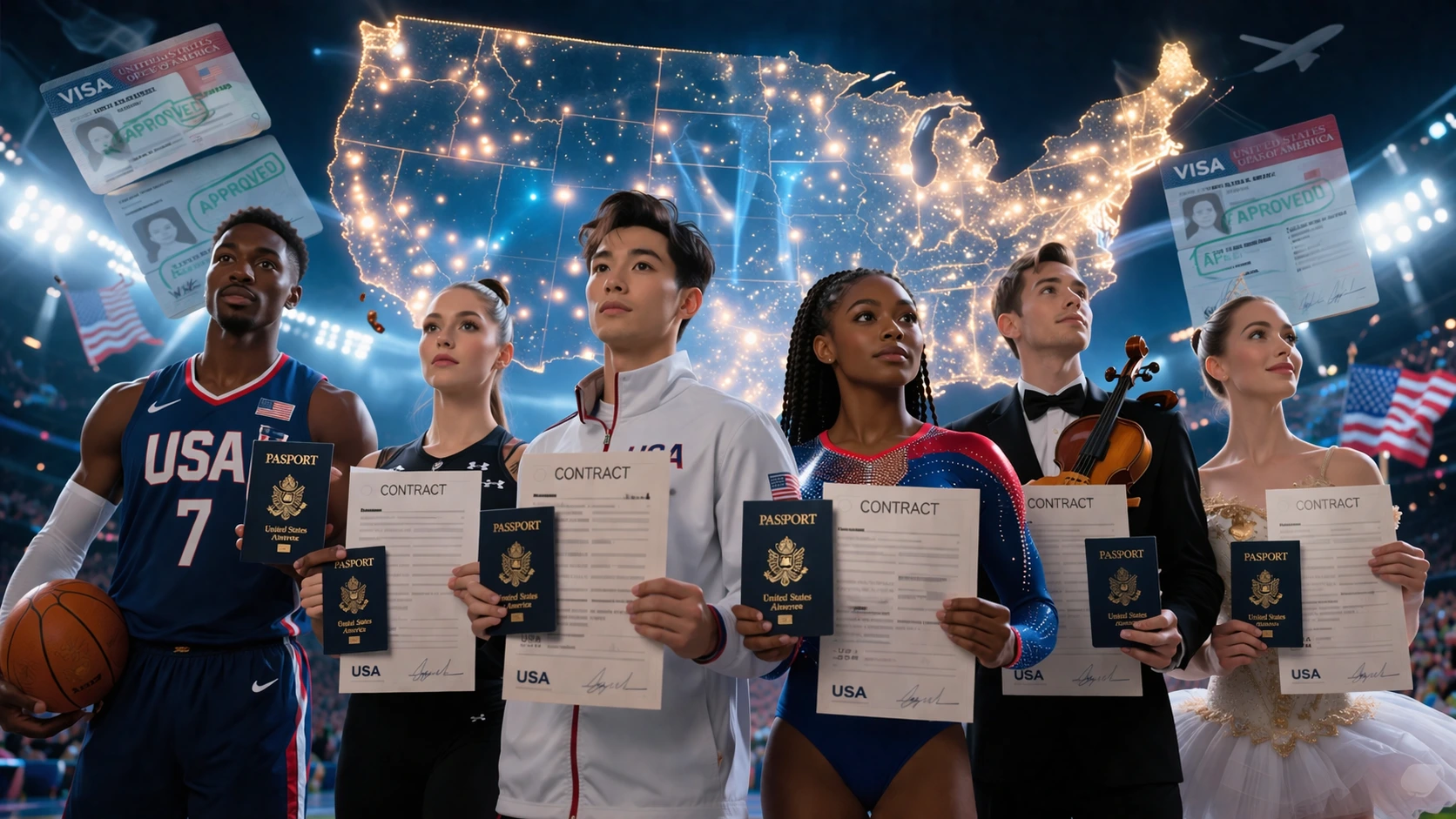
Introduction: A Turning Point for Athlete and Artist Visas
Indeed, the United States is one of the best places where athletes and artists can showcase their talents and develop professionally in front of millions of people. It does not matter whether it is an international tournament or an international tour; there are many such opportunities here.
Still, the new trend is that P-1 and O-1 visas are now undergoing more rigorous analysis than before. There is no question about that.
Such development becomes especially important considering the fact that in the next three years, the United States will become a host of the 2026 FIFA World Cup, which means that many people will require these visas.
In this blog post, we discuss how everything changed and provide useful information for applicants.
What Are P-1 and O-1 Visas
P-1 Visa for Athletes and Teams
The P-1 visa is designed for internationally recognized athletes and teams. It allows them to compete in events, leagues, and tournaments in the United States.
It is commonly used by:
- Professional athletes
- Sports teams
- Coaches and essential support staff
O-1 Visa for Extraordinary Ability
The O-1 visa is for individuals who can demonstrate extraordinary ability in their field.
This includes:
- Athletes
- Musicians and performers
- Film and television professionals
- Other high achievers
Both visa types have traditionally allowed some flexibility in documentation, especially when it came to event schedules.
What Has Changed in Visa Processing
The biggest change is not a new law but a stricter way of reviewing applications.
Earlier Process
Previously, applicants could submit:
- Tentative itineraries
- Event schedules
- Promotional materials
- Letters of intent
This worked well because many events in sports and entertainment are finalized after a visa is approved.
Current Trend
Now, immigration authorities are increasingly asking for:
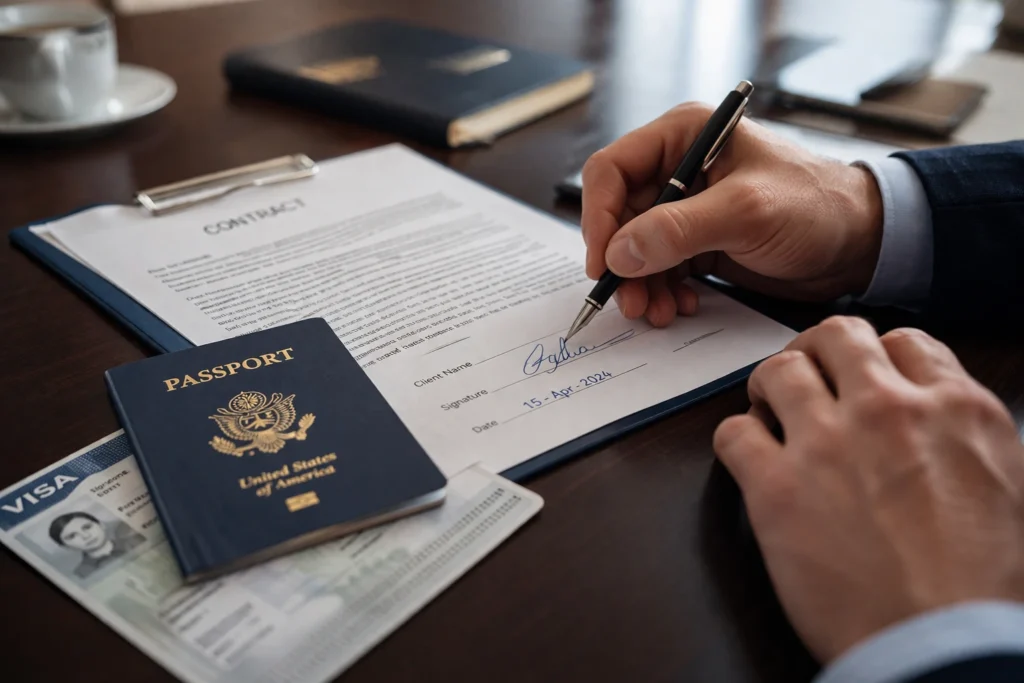
- Signed contracts for every event listed
- Confirmed agreements with venues
- Clear and verifiable schedules
This means that planning must happen much earlier than before. Applications based on tentative plans are more likely to face delays or rejection.
Why Authorities Are Increasing Scrutiny
Fraud Prevention
One of the main reasons is to prevent misuse of visa categories. Loose documentation in the past made it easier for some applicants to submit unclear or unverifiable plans.
Better Compliance
Stricter checks ensure that:
- Events are genuine
- Applicants follow visa rules
- Sponsors and agents are accountable
High Volume of Upcoming Applications
With events like the 2026 FIFA World Cup, the number of visa applications is expected to rise sharply. Authorities are tightening processes to manage this demand.
Effects on Sportsmen, Artists, and Institutions
The Problem of Scheduling
For some professions, such as sport, scheduling is flexible. In these cases, visa approval is necessary for deals to take place. The whole process has been turned upside down since now one needs a contract to apply.
Risks of Delay
Incomplete applications might cause:
- Need for additional documentation
- Increased application processing time
This affects future travel plans and ability to participate in events.
Increased Risk of Refusal
Even if the applicant looks promising, he or she still faces refusal in case no signed contract could be provided for all proposed activities.
Financial Risks
Applicants and organizers may need to commit to agreements before knowing if the visa will be approved. This creates financial risk for both parties.
The 2026 World Cup Factor
The 2026 FIFA World Cup makes this situation more urgent.
Scale of the Event
- Thousands of athletes will travel to the U.S.
- Teams will bring coaches, medical staff, and support personnel
- Media and entertainment professionals will also be involved
Potential Challenges
- Visa delays could disrupt team schedules
- Last-minute approvals could affect performance preparation
- Event organizers may struggle with coordination
Industry Concerns
Experts believe that requiring signed contracts for every event does not align with how the industry operates. Many agreements are usually finalized after visa approval.
What Petitioners Need to Know
Petitioners such as agents, teams, and sponsors play a key role in visa applications.
New Expectations
They must now:
- Secure signed agreements in advance
- Coordinate closely with venues
- Provide detailed documentation
Increased Responsibility
Any mistake or missing document can affect the entire application. This is especially critical for group filings involving teams or touring artists.
How to Prepare for the New Requirements
Start Early
Begin planning and documentation as soon as possible. Waiting until the last minute is no longer an option.
Secure Signed Contracts
Make sure every event listed in the application is backed by a signed agreement. This is now one of the most important parts of the process.
Build a Strong Application
Include:
- Detailed itinerary
- Contracts for each event
- Supporting documents
- Proof of recognition or achievements
Work with Experts
An experienced immigration professional can help structure the application properly and reduce the risk of delays or rejection.
Plan for Uncertainty
Even with preparation, delays are possible. Always have backup plans in place.
Advantageous Strategy for Those Who Are Prepared
Although there will be difficulties with this process, it will provide advantages to those who are adequately prepared.
Complete Documentation Leads to Quicker Action
Applications with adequate documentation can be approved more quickly.
Preparation Will Lead to Success
Teams and artists who prepare accordingly will find themselves at an advantage to those who do not.
Future Outlook
As the 2026 FIFA World Cup approaches, further tightening of visa processes is possible.
We may see:
- More detailed documentation requirements
- Increased verification checks
- Longer processing timelines
This could become the new standard for athlete and artist visas in the future.
Conclusion
The intensified scrutiny of P-1 and O-1 visas is a huge change and something that must not be overlooked. Although it complicates things, it also emphasizes the need for thorough planning and preparation.
For all athletes, performers, and teams looking to come and work in the U.S., preparation is essential. As there will be many international competitions such as the FIFA World Cup in 2026, being prepared ahead of time will go a long way.